
Estimating
Short-Load Fees: Why a 3-Yard Concrete Pour Costs More Per Yard
By Shafaqat Ali, October 20, 2026 · 3 min read
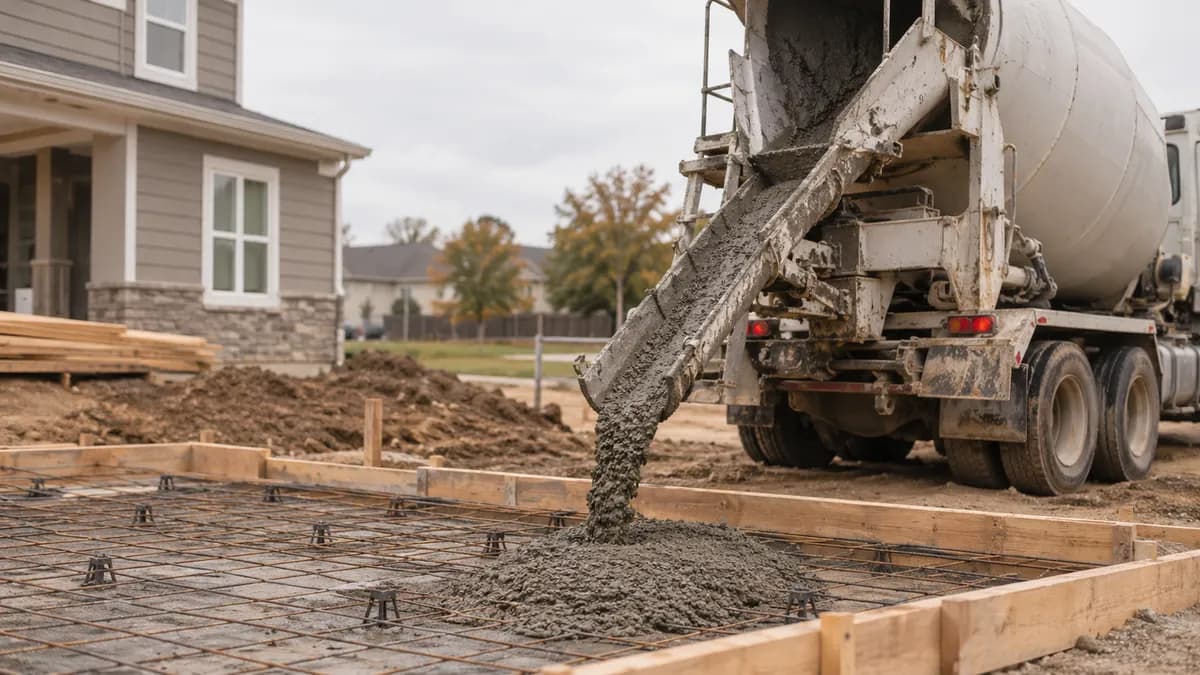
A short-load fee is a surcharge a ready-mix plant adds when you order less than its minimum load. Because the plant sends a full truck and driver either way, the fee lands on fewer yards, and small pours end up costing far more per yard than big ones. A 2-yard pour can easily run $250 to $300 a yard delivered while a 10-yard pour from the same plant stays near $180.
How much is a concrete short-load fee?
There is no single industry rate. You will see three patterns:
- A flat fee per load. Published 2026 ranges run from about $50 to $250 per delivery.
- A rate per yard short of the minimum. For example, $60 a yard for every yard under a 10-yard minimum.
- A rate per yard ordered on any load under the minimum. Around $53 a yard shows up in several national price guides.
Minimum loads also vary. Some plants set the line at 8 to 10 yards, others at 3 to 5. Two plants in the same town can give very different numbers for the same small pour, so always ask for the short-load terms in writing, not just the price per yard.
The math on a 3-yard pour
Say the plant charges $180 a yard, has a 10-yard minimum, and bills $60 for each yard short.
- Concrete: 3 yd × $180 = $540
- Short-load fee: (10 − 3) × $60 = $420
- Total: $960, or $320 per yard
The same plant on a full 10-yard truck: 10 × $180 = $1,800, or $180 per yard.
The short-load fee on the 3-yard pour is almost as much as the concrete. Fuel, environmental and delivery fees, usually $15 to $120 a load, sit on top in both cases and hurt the small pour more. For which common slab sizes fall under a typical minimum, see concrete slab cost by size.
Where the threshold catches estimators
Short loads are not only a homeowner problem. They show up on commercial jobs in places that are easy to miss in a quantity takeoff:
- Pier and post footings poured a few at a time
- Equipment pads, transformer pads and bollard fills
- Curb repairs and patchbacks after underground work
- Stair landings, ramps and small infill slabs
- The last truck on a big pour, when the final load is only 2 or 3 yards
That last one matters. A 33-yard pour is three full trucks and a 3-yard short load. If the plant bills the short load, it belongs in the estimate.
Ways to cut the fee
- Combine pours. Pour the pads, footings and stoops on the same day and let one truck serve several placements.
- Round up when you are close to the minimum. If you need 7.5 yards from a plant with an 8-yard minimum and a $150 flat fee, the extra half yard costs about $90 and removes the whole fee.
- Use a volumetric truck. These trucks mix on site and charge for what you place. They usually have no short-load fee, at a higher base price per yard.
- Ask about off-peak timing. Some plants waive or reduce the fee for midweek or early-morning orders when trucks would otherwise sit.
- Compare bags only on very small pours. Under about a yard, 80 lb bags can come out cheaper than any delivered load once fees are included.
What to put on the bid
List the short-load fee as its own line with the number of loads it applies to. If the plant's terms are not confirmed yet, carry an allowance and say so in your qualifications. A clean line item protects you when the GC asks why your concrete price per yard is higher than the next bidder's. If you need the concrete priced off plans, see our subcontractor estimating service.
Free estimating tools
Bidding something right now?
Send the plans and get a fixed-fee quote back within hours.