
Estimating
Tariff Refunds After the Supreme Court Ruling: What Subcontractors Can and Cannot Recover
By Shafaqat Ali, October 20, 2026 · 4 min read
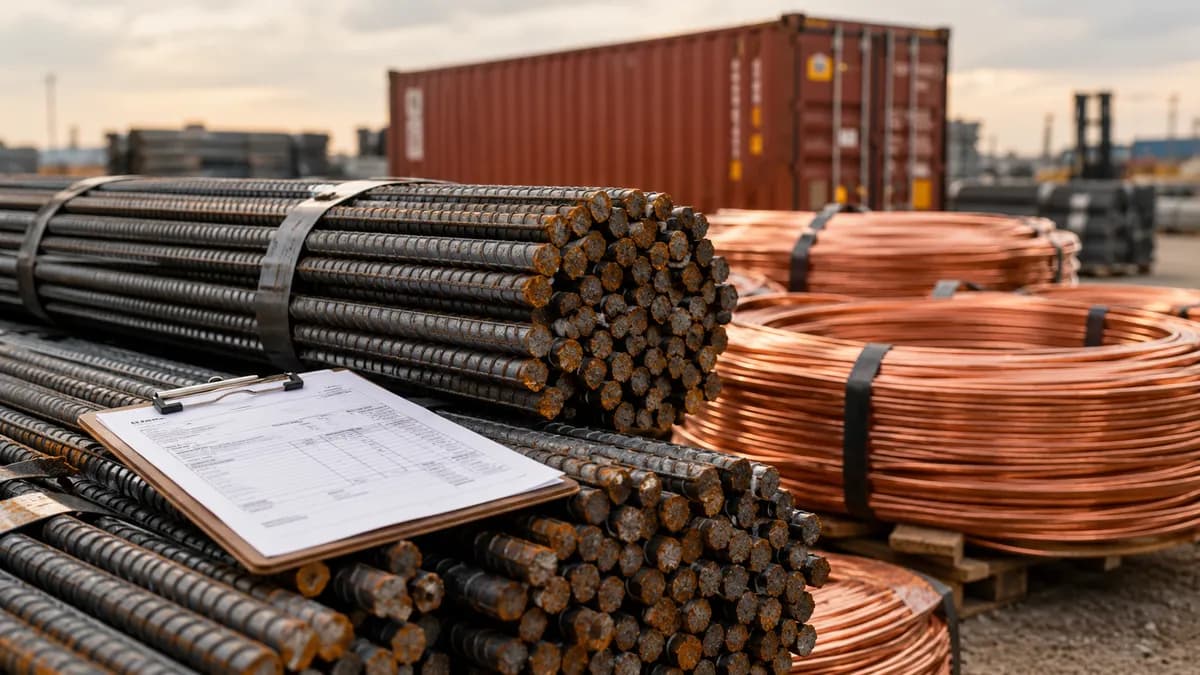
If you are a subcontractor and you did not import the steel, copper or equipment yourself, you probably cannot file for an IEEPA tariff refund. The refund goes to the importer of record. What you can do is find out whether your supplier filed, tie the tariff you paid to specific invoices, and ask for your share back where your contract or relationship allows it.
Here is where things stand as of mid-October 2026, and what a sub can and cannot recover.
What the Supreme Court actually struck down
On February 20, 2026, the Supreme Court ruled in Learning Resources, Inc. v. Trump that the International Emergency Economic Powers Act does not let the President impose tariffs. That killed the broad "reciprocal" and fentanyl-related duties collected under IEEPA from early 2025 until February 2026.
It did not touch the tariffs that hit construction hardest. The Section 232 duties on steel, aluminum and copper were imposed under a different law and are still in force. Most steel and aluminum articles carry 50%, many derivative products carry 25%, and a June 2026 proclamation cut some construction and material-handling equipment to 15% through the end of 2027.
So if your cost increase came from rebar, structural steel, wire or conduit, the ruling probably does not give you a refund for that part.
How the refund process works
The Court of International Trade ordered refunds on March 4, 2026, and said every importer of record that paid IEEPA duties is entitled to them, not only the companies that sued.
Customs runs the refunds through a system inside its ACE portal called CAPE:
- Phase 1 (opened April 20, 2026): unliquidated entries and entries no more than 80 days past liquidation.
- Phase 2 (opened June 29, 2026): entries flagged for reconciliation.
- Phase 3 (opened October 6, 2026): finally liquidated entries, but only for importers who are plaintiffs in a Court of International Trade case and whose entries the court has ordered reliquidated.
Accepted claims are paid with interest, usually 60 to 90 days after acceptance. By early October, CBP had accepted roughly $136.6 billion in refunds for processing.
On October 8, 2026, the trade court also certified a class of importers who paid IEEPA duties between February 1, 2025 and February 19, 2026. No relief has been ordered for that class yet.
Can a subcontractor get a tariff refund?
If you were the importer of record. You can file in CAPE yourself. A few subs who buy specialty equipment or fixtures direct from overseas are in this group. Treat the filing seriously: a refund claim reopens your entries, and Customs can look again at classification, value and country of origin.
If your supplier was the importer. You have no claim against Customs. Your claim, if any, is against the supplier, and it depends on paper:
- A purchase order or quote that showed the tariff as a separate surcharge line is your strongest position. You paid an identifiable amount for a duty that has now been refunded to the supplier.
- A price that simply went up, with no tariff line, is much weaker. The supplier will say you agreed to a price.
- Long-term supply agreements, open-book pricing and cost-plus arrangements give you more room to ask for a credit than a one-off lump-sum buy.
Ask your suppliers in writing whether they filed CAPE declarations on goods they sold you, and whether they intend to pass any of it back. Some will. Many will not unless you can show the surcharge on their own invoice.
If you passed the tariff up to the GC or owner. Read your own contract before you chase anyone. If you billed a tariff surcharge or got a change order for it, the GC may come asking for that money back once refunds are public knowledge.
What a subcontractor cannot recover
- Section 232 steel, aluminum and copper duties. They were not part of the ruling.
- The Section 122 surcharge that ran from February 24 to July 24, 2026. A trade court decision in May found it unlawful, but relief was limited to the plaintiffs, and the government appealed.
- The Section 301 tariffs of 10% or 12.5% that replaced Section 122 on July 24, 2026 for 60 trading partners. They are still being collected.
- Cost increases a supplier priced in without ever paying an IEEPA duty, for example domestic material that rose because imported material got more expensive.
Put a number on your exposure
Before you chase suppliers, find out how much tariff money is actually sitting in your open bids. Enter your steel, aluminum, copper and lumber quantities in our tariff and material escalation calculator to get a dollar figure and check refund eligibility.
A short checklist for this month
- List every purchase from February 2025 to February 2026 that carried a tariff surcharge line. Note the supplier, PO number, invoice number and amount.
- Send each of those suppliers one written question: did you file a CAPE declaration for these goods, and will you credit the surcharge?
- Check your prime contracts and change orders for any tariff money you billed upstream.
- Ask your accountant about state sales and use tax. In many states the tax base included the tariff, so a refunded tariff can mean the tax was overpaid too.
- For new bids, put the tariff exposure in writing with a price escalation clause instead of a buried contingency. If you want tariff exposure broken out on an upcoming bid, see our subcontractor estimating service or send us the plans.
This article is general information, not legal or tax advice. Rules and CAPE phases are still changing, so confirm your position with a customs broker or trade attorney before you rely on it.
Free estimating tools
Bidding something right now?
Send the plans and get a fixed-fee quote back within hours.